Umbraco Automate Is Here


Automation has always lived at the edges of a content management system. You built the site in one place, then bolted on a separate automation platform to move data around, fire off emails, notify a sales team, or sync a record to a CRM. Every one of those connections was another subscription, another point of failure, another place for client data to travel outside a controlled environment. In July 2026, Umbraco released Umbraco Automate, and it collapses that gap. Automation now lives inside the CMS itself.
As an Umbraco Gold Partner, Scandia has spent years designing the workarounds that Automate was built to replace. We've stitched Umbraco sites to third-party automation tools, written custom middleware to bridge forms and CRMs, and maintained the glue code that kept it all running. Automate lets us stop maintaining the glue and start designing the outcome. This post covers what Automate actually is, and—more importantly—how we're folding it into the solutions we build for clients.
What Umbraco Automate actually is
Umbraco Automate is a drag-and-drop automation engine built natively into the Umbraco backoffice. Instead of describing a workflow to a developer and waiting a sprint for it to ship, a marketer can open a visual canvas, pick a trigger, chain together actions, and turn the automation on. The classic example Umbraco uses is a new customer signing up: an onboarding email goes out, the sales team gets notified, and a unique discount code is generated—all without a developer touching the code.
A few characteristics make it genuinely different from the bolt-on tools it replaces. It's open source, like the CMS itself, which means no vendor lock-in and full access to extend triggers and actions in C# when a client's process doesn't fit the defaults. It has no usage limits—no caps on the number of runs, triggers, actions, users, or workspaces—so a client's automation costs stay fixed and predictable as their volume scales, rather than climbing through the pricing tiers that SaaS automation platforms are built around. It ships with out-of-the-box triggers and actions, including native triggers for the Umbraco add-ons clients already run: Forms (a form was submitted), Commerce (an order was created, finalised, or changed status; stock changed), and Engage (a persona score changed, an A/B test started). And through webhooks, it connects to essentially any external system, whether or not that system has ever heard of Umbraco.
Crucially, it runs where the CMS runs. That single architectural fact is the through-line for everything below.
Why the Gold Partner angle matters here
New Umbraco capabilities are only as good as the implementation behind them. A drag-and-drop canvas makes simple automations easy, but the automations that actually move the needle for a client—the ones tied to revenue, compliance, and customer experience—need someone who understands both the marketing outcome and the architecture underneath it. That's the work Scandia's Gold Partner status represents.
Automate's hybrid model is built for exactly this division of labor. Marketers get a canvas they can own day to day. Developers keep full architectural control to write custom triggers, wire in external systems, and design the complex control flows—paths, loops, if-statements, switches—that a real business process demands. Our role as a partner is to build that foundation correctly: the custom C# actions specific to a client's stack, the webhook connections to their existing tools, the permission-led workspaces that govern who on their team can change what. Once that scaffolding is in place, we hand the day-to-day controls to the client's team and step back to the role of architect rather than bottleneck.
That handoff is the point. The goal isn't to make clients dependent on us for every automation tweak. It's to give them a system they can operate confidently, backed by a partner who built it to hold up.
Streamlining client work streams
The practical value of Automate shows up in the recurring, “boring-but-necessary” processes that quietly consume a client's team. A few patterns we're already mapping onto client engagements:
Lead and enquiry handling. A visitor submits a “request a quote” form. Automate sends the confirmation email, notifies the right sales rep in Slack, and pushes the contact into the client's CRM via webhook—instantly, every time, with no manual triage. What used to be a handful of disconnected integrations becomes one flow the client can see and adjust.
Commerce operations. For clients running Umbraco Commerce, order events become automation triggers. An order is finalised, so a fulfillment notice goes out and inventory is checked; stock drops below a threshold, so a purchasing alert fires. The commerce process and the automation engine live in the same place, which removes the sync lag and reconciliation headaches that come from running them in separate systems.
Onboarding and lifecycle journeys. New member sign-ups, welcome sequences, re-engagement nudges, cart recovery—the customer journeys that marketers want to design and iterate on without filing a ticket every time they change a step. We build the connective tissue once; the client's team owns the messaging and timing.
The common thread is time-to-value. Umbraco frames the shift as moving journey design from weeks to minutes, and in our experience that's the real unlock—not that any single automation is novel, but that the cost of building and changing them drops far enough that clients actually build them.
AI with a human safety net
The part of Automate we're most deliberate about is its AI integration—because it's the part that's easiest to get wrong. Automate can trigger AI agents inside a flow: draft a summary when new content is uploaded, generate alt-text for an image, produce a first-pass caption. It can also work the other way, with an AI agent triggering an automation.
What makes this usable for real client brands is human-in-the-loop approval. You can insert an approval step between the AI output and anything going live, so a person on the client's team reviews every draft before it ships. That's the difference between AI that speeds up the tedious parts of content production and AI that quietly puts unreviewed copy in front of customers. We treat that approval gate as a default, not an option. For clients who are rightly cautious about AI touching their brand voice, it's the feature that turns “no” into “yes, with guardrails.”
The compliance dividend
One more reason we're leaning into Automate: it runs in the client's own environment rather than routing data through a third-party automation vendor's servers. When a workflow processes personal information—a member sign-up, a form submission containing PII—that data never leaves the client's secure environment. For clients with GDPR obligations, that's a meaningful simplification of their compliance surface and one fewer data-processing agreement to negotiate and monitor. It's the kind of architectural advantage that doesn't show up in a feature demo but matters enormously when a client's legal team asks where the data goes.
Where Scandia goes from here
Umbraco Automate is available now, with beta access having preceded the release. Our plan is straightforward: identify the highest-friction, highest-repetition workflows in each client's current setup, rebuild them inside Automate where it makes sense, and put the day-to-day controls in the client's hands with the right permissions and approval gates in place. For clients already on Umbraco, much of this is additive—we're activating capability that now ships with the platform they own.
If you're a client wondering whether a process you're currently handling manually—or paying a separate tool to handle—could live inside your Umbraco site instead, that's exactly the conversation we want to have. Automate has made the answer “yes” far more often than it used to be.
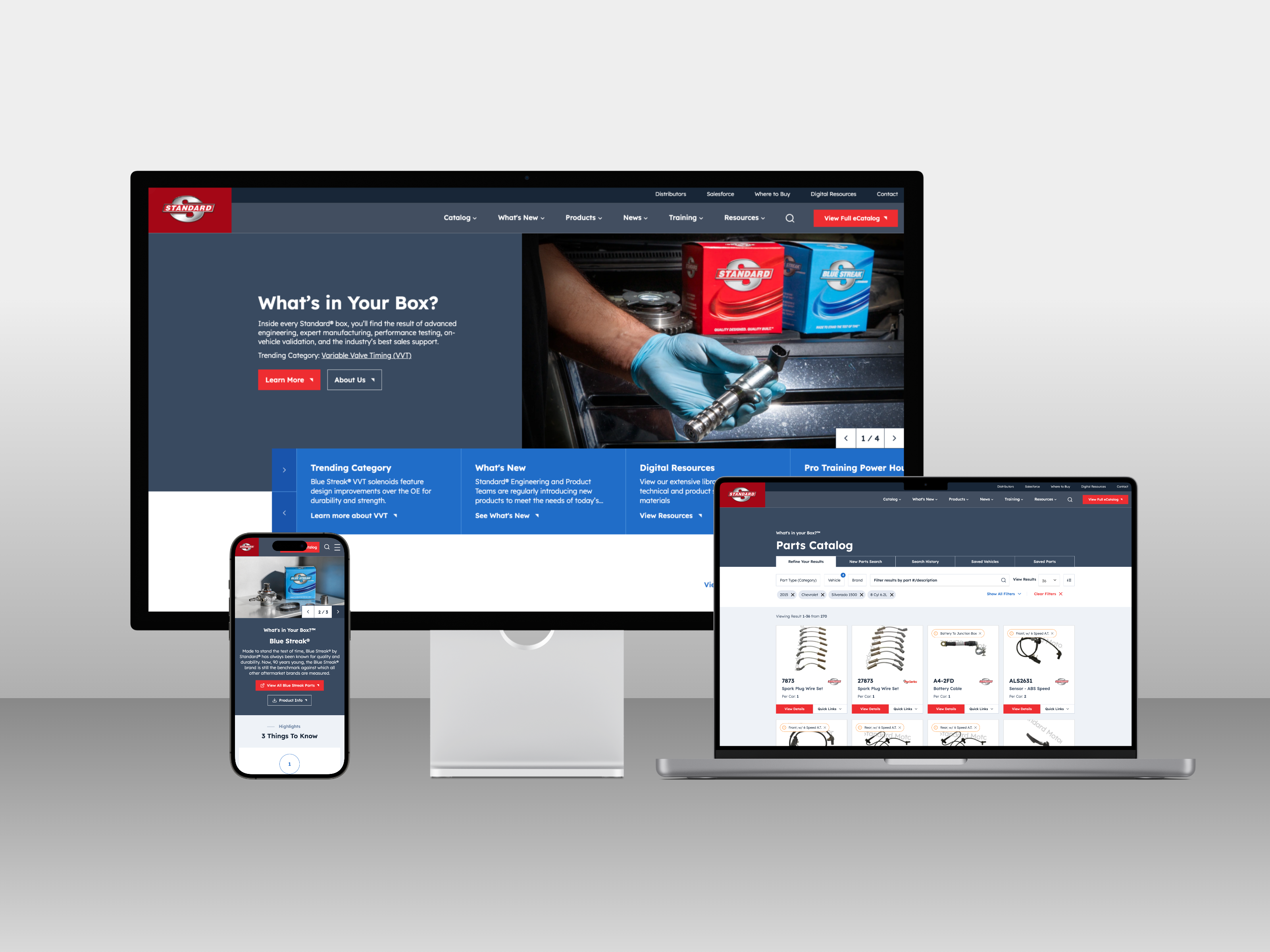
Standard Motor Products Launches a New Standardbrand.com with a 750,000-SKU eCatalog
Scandia is proud to announce the launch of the newly redesigned standardbrand.com for Standard® — a flagship brand of...


Creating a Website That Evolves With Your Business
In today’s digital age, a strong online presence is crucial for business success. As your business grows, your websit...


Wrapping Up 2024: Reflecting on Our Projects, Challenges, and What’s Next
As 2024 draws to a close, it’s the perfect time to reflect on the year’s journey — the projects we’ve undertaken, the...